
Views: 0 Author: Site Editor Publish Time: 2026-02-28 Origin: Site


Solid-state batteries refer to lithium-ion batteries that use solid electrolytes instead of liquid electrolytes. Based on the amount of solid electrolyte used, they can be further divided into two main categories: semi-solid-state batteries and all-solid-state batteries:
1) Semi-solid-state batteries: The electrolyte uses a solid-liquid mixture, with the liquid (electrolyte) accounting for approximately 5-10% of the battery's mass. Essentially, it's a compromise between liquid lithium-ion batteries and all-solid-state batteries.
2) All-solid-state batteries: These use solid electrolytes entirely instead of liquid electrolytes. Generally, a 10% liquid mass percentage is considered the dividing line between semi-solid-state and liquid batteries.
Solid-state batteries represent a major strategic direction for the next generation of battery upgrades. While significant progress has been made in the development of all-solid-state batteries, many practical challenges remain. High-energy-density sulfide all-solid-state batteries still require overcoming a series of key scientific challenges at multiple levels, including key materials, interfaces, composite materials, electrodes, and cells.
Currently, the development of all-solid-state batteries is shifting from "material breakthroughs" to "engineering verification." The operational status of each company's pilot production lines in 2026 will directly determine the ability to achieve the "small-batch mass production" target in 2027.
The EVE target sets 400Wh/kg and 1000Wh/L energy densities for solid-state batteries as key indicators. The company will invest heavily in funding, equipment, and R&D resources to accelerate the industrialization of all-solid-state batteries.

All-solid-state batteries (ASSB) are currently in a critical transition phase from laboratory to small-batch trial production. Major manufacturers plan to achieve small-batch production or vehicle verification between 2026 and 2027.
The main manufacturers of all-solid-state cells and their progress are as follows:
The following are the major solid-state cell manufacturers and related companies:
Leading power battery suppliers:
CATL: Possesses deep technological accumulation and industrial layout in the field of solid-state batteries.

Guoxuan High-Tech: Developed the sulfide all-solid-state "Gold Stone Battery," which has high ionic conductivity.
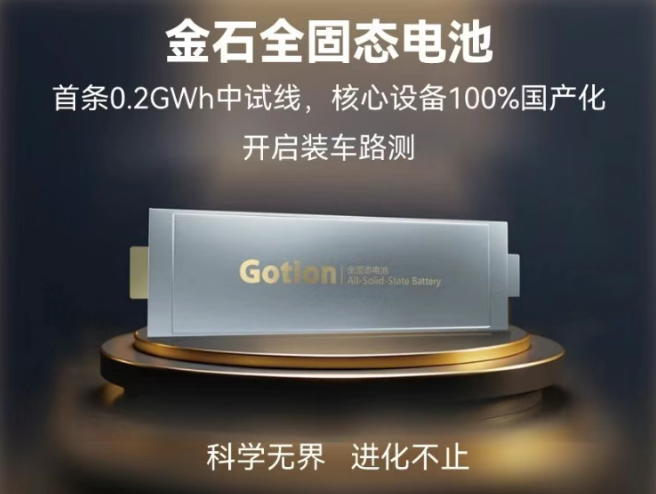
BYD: Plans to conduct batch demonstration vehicle installations around 2027. Zhongchuang Innovation Aviation, Sunwoda, EVE Energy, and Farasis Energy: All have relevant technology deployments.
Emerging Solid-State Battery Players and Leading Companies:
Tailan New Energy: Leading the pack with its strong deployment of cutting-edge technologies.
Qingtao Energy: Achieves significant results in solid-state battery R&D.
Weilan New Energy: Focuses on hybrid solid-liquid and all-solid-state technologies.
Ganfeng Lithium: Deploying high-energy-density solid-state cells.
Penghui Energy, Narada Power, and Delphi: Focus on oxide battery technology.


China’s battery industry is entering a new stage of tax and technology policy adjustment.Recently, China’s Ministry of Finance, General Administration of Customs, and State Taxation Administration jointly issued the Announcement on Adjusting Consumption Tax Policies for Certain Batteries. According


